
Aisle of GPU server racks lit with cyan light

GPU compute · Model engineering · Vancouver, Canada

GPU clusters for AI drug discovery teams.

Curemodel AI rents NVIDIA-certified GPU clusters from Vancouver and helps teams train and deploy models on them. Customers are AI drug discovery companies and research groups that need capacity for a run, and an engineer to call when it fails.

NVIDIA-certified infrastructure On-demand or reserved Canadian data residency

Held for the whole runThe cluster is yours from start to finish, then released.
Automatic recoveryFailed nodes are replaced without starting the job over.
Engineers on the callSupport is answered by the engineers who build the clusters.
Canadian residencyData and compute can stay inside Canada.

01 — What we do

Compute, platform and operations.

Most customers start with capacity and later use the platform for tuning and deployment. Both run on the same hardware, so a project does not have to be rebuilt when it moves from experiments into production.

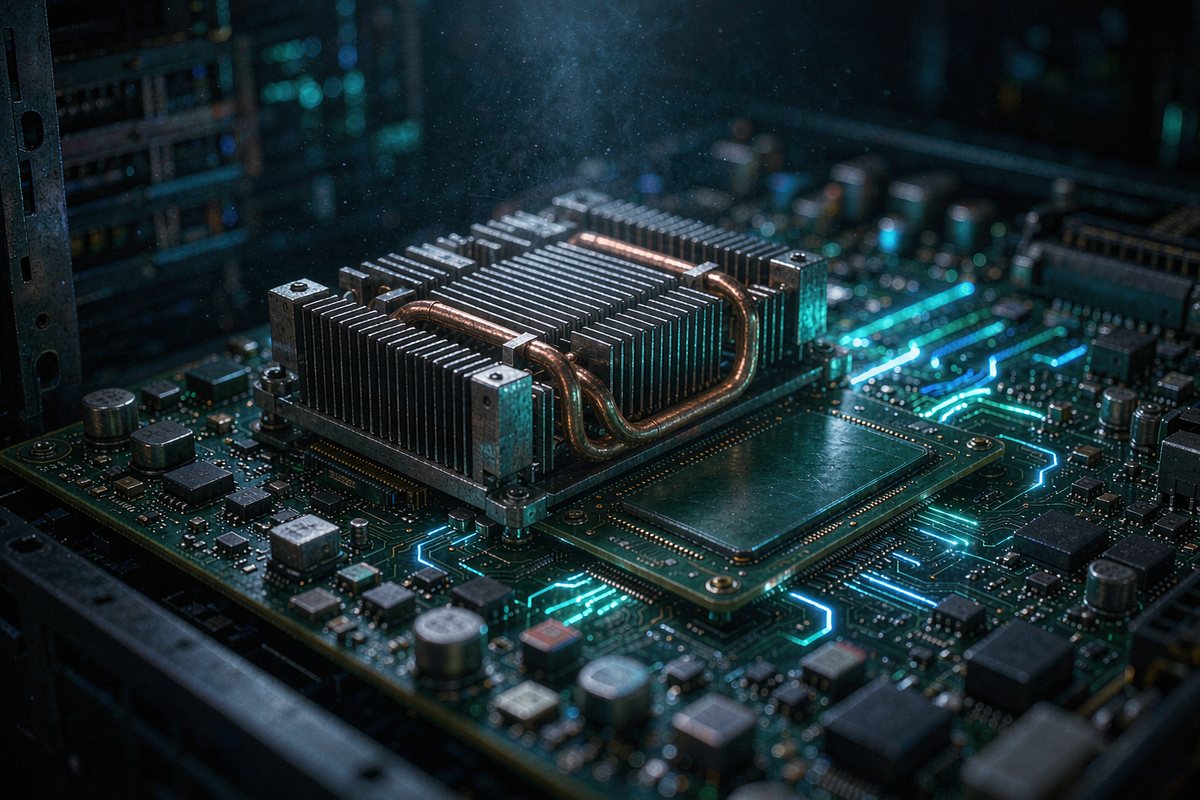
Close-up of a GPU board inside a server chassis

01 / Compute

GPU clusters

Clusters on NVIDIA-certified hardware, with automatic recovery. Rent by the node, or reserve a fixed shape for the length of a project.

  • Pre-training, fine-tuning, batch inference
  • High-speed interconnect between nodes
  • Kubernetes or Slurm, your choice

Abstract network of connected compute nodes

02 / Platform

Model tuning platform

Reinforcement learning, supervised fine-tuning and parallel LoRA sweeps on the same cluster you train on. Checkpointing and evaluation are part of the platform, so a run that dies at hour nine does not start again from zero.

  • RL and SFT in the same stack
  • Parallel LoRA sweeps across nodes
  • Checkpointing, evaluation, rollout
Rows of GPU racks in a data center aisle

03 / Operations

Data center & GPU operations

Build-out and operations for teams that buy their own hardware. We design the floor, commission it and run it, so you do not have to hire a facility team.

  • Power, cooling, network design
  • Procurement and commissioning
  • Ongoing monitoring and maintenance
Streaks of light moving through dark fibre
“A cluster that arrives three weeks late is worth very little, whatever hardware is inside it.”
From our compute terms

When a lab reserves a cluster, the start date is in the contract. We hold the hardware for the term of the job and do not reallocate it, even if another customer asks for the same machines.

After that, most of the work is ordinary engineering: keeping the data pipeline up with the GPUs, choosing a checkpoint interval, and having someone on the phone who knows the cluster.

02 — Applications

Four applications in development.

Compute is the business today. These four are what we are building on top of it. All of them are in development and none is a released product.

3D render of a DNA double helix built from glowing data
In development

Genome sequencing analysis

Variant interpretation, pathogenic site screening and therapy matching from whole-genome data. The heaviest of the four in compute terms, and the one we spend most of our time on.

3D render of a protein ribbon structure
In development

Protein structure prediction

Structure and conformational change prediction for target discovery, epitope analysis and binder design.

3D render of a small molecule ball-and-stick model
In development

Small molecule generation

Generative design with multi-objective screening on activity, selectivity, developability and toxicity. The output is a ranked candidate list for synthesis.

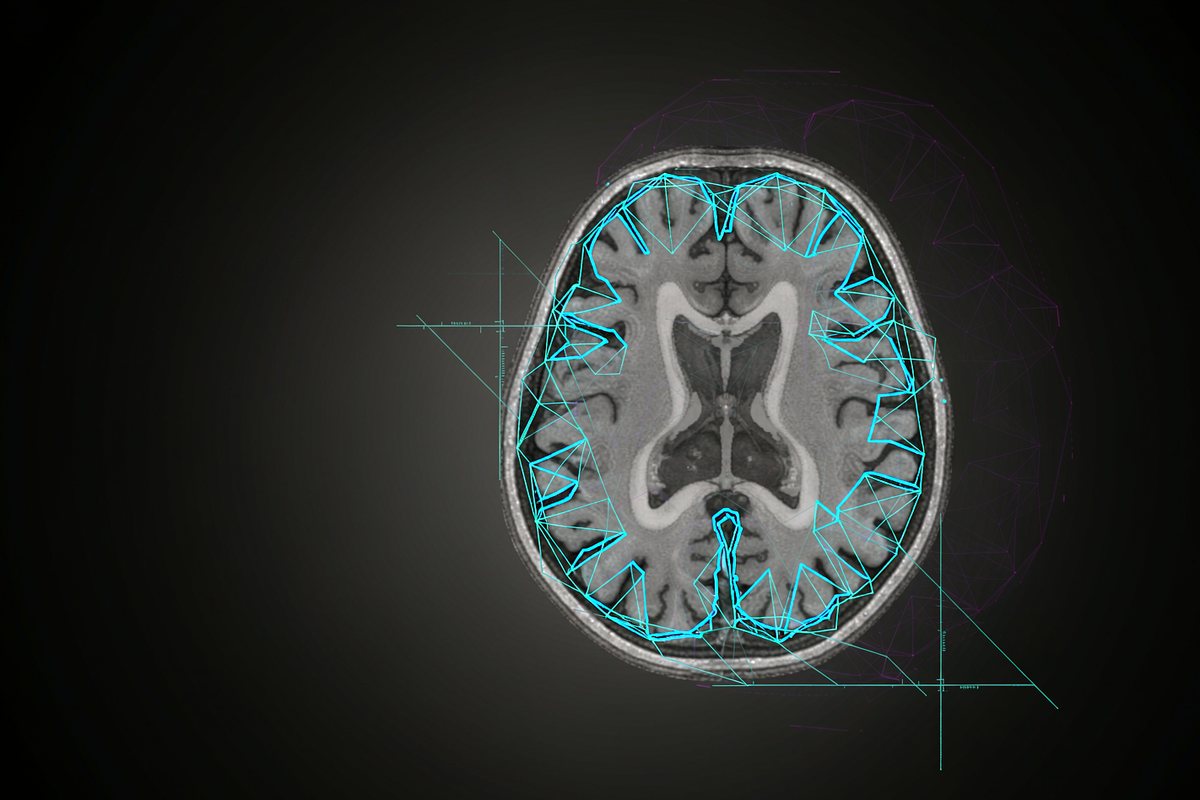
Brain scan slice with AI segmentation contours
In development

Medical imaging analysis

Detection, segmentation and quantification across pathology, CT and MRI, linkable to genomic data for combined studies.

What each programme involves →

03 — How it runs

How a project runs.

Three stages. A project can start at any of them, and most start at the first.

01

Scope and allocate

We look at the workload: model size, sequence length, batch shape and how long a run takes. Single node for a fine-tune, multi-node with fast interconnect for pre-training. You get a start date and the cluster for the term of the job.

02

Tune on the cluster

Our engineers work alongside your ML team on the parts that break at scale: data pipelines, distributed training, checkpointing, evaluation. A distributed job that is going to fail usually fails early, and it is cheaper to find that on day one than on day five.

03

Hand over a running service

A deployment with monitoring, a rollback path and a number that reaches an engineer during the engagement. Once the model is in front of users, support does not move to a ticket queue.

04 — Sizing

What each workload needs.

A rough guide to how we shape a cluster. Most of the time the limit is interconnect and checkpoint throughput rather than the speed of a single card.

Cluster sizing guidance by workload
WorkloadTypical shapeWhat decides the outcome
Pre-training from scratch Multi-node, 8 GPUs per node, high-bandwidth fabric Interconnect and checkpoint throughput. One slow node holds up the rest.
Fine-tuning (LoRA / QLoRA) Single node, 8 GPUs, fast local NVMe Memory headroom and dataset feeding. Storage is usually the bottleneck.
RL post-training Training pool plus a separate rollout/inference pool Scheduling between generation and learning. Idle GPUs on either side are waste.
Batch inference Autoscaled pool, mixed precision, queued jobs Cost per sample and time in the queue. Peak throughput matters less.
Genomic pipelines GPU-accelerated alignment and variant calling I/O on TB-scale inputs. Speeding up compute without fixing storage only moves the queue.

Shapes are guidance, not a price list. We quote after scoping the workload.

05 — Data and paperwork

Data handling and paperwork.

Your data stays in your tenancy

We do not train shared or public models on customer datasets. What you bring in is used for your workload only, and removed when the engagement ends.

Residency you can put in a contract

Clusters and stored datasets can be kept in Canada for teams with jurisdictional or institutional requirements.

Paperwork first

NDA, data processing terms, security questionnaire, architecture review. These are normally completed before a GPU is allocated.

Tell us what you are training.

Tell us the model, the dataset size, how long a run takes and when you need to start. With those four we can say whether we can hold the capacity and what it costs.